Hi, I’m Calder. I make systems of meaningful forms. Or sometimes just systems, or forms, or things that feel meaningful.

All work
Writing & Notation Systems
Visual Codes
Lettering
3D
Music Visualization
Photography

ITP portfolio

CRH Shorthand is an example of one of my writing systems; Contour Code and Resolution Code are the systems I describe in my essay that represent text with a more diverse range of visuals. VAoLM explorations records the beginning of my process toward the vision I describe in the essay.

The music visualizations and Recursive Prime Numeral System do not represent language, but they manifest the same theme of presenting something in a new form.

I am also including the shading system as an example of a more complex software project.

Some of these works have explanatory videos or writing associated with them; feel free to engage with these as much or as little as you choose.

MAS portfolio

CRH Shorthand is an example of one of my writing systems; Contour Code and Resolution Code are the systems I describe in my essay that represent text with a more diverse range of visuals. The music-driven animation and Recursive Prime Numeral System do not represent language, but they manifest the same theme of presenting something in a new form. I am also including the shading system as an example of a more complex software project.

Some of these works have explanatory videos or writing associated with them; feel free to engage with these as much or as little as you choose.

Contour Code

A system that encodes text in compositions of shapes

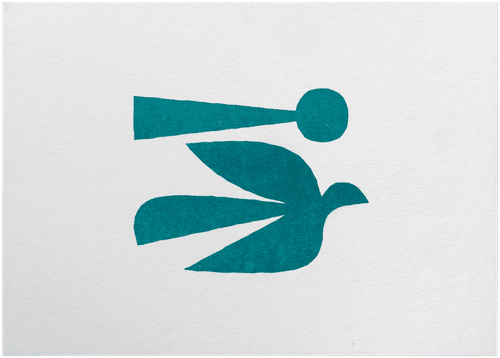
Risograph print, wider than it is tall. In the center is a symbol in teal composed of two solid shapes. The bottom shape is a stylized bird; its outline is made of a few nearly-geometric arcs and straight lines; it flies swiftly to the right. Above it, nearly touching, is a comet-like shape: a small circle, nearly above the bird’s head, with a long, wedge-shaped tail extending as far back as the bird’s tail.
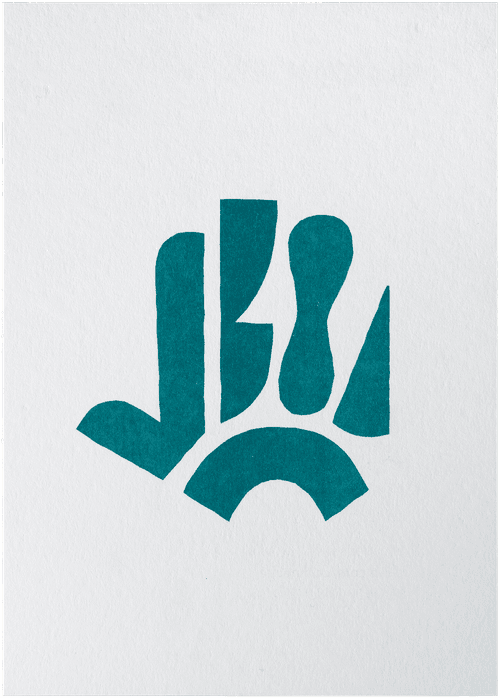
Risograph print, taller than it is wide. In the center is a symbol in teal composed of five solid shapes, resembling a right hand. The bottom shape is a thick arch; the fingers are arranged on top of it. The thumb and index finger are joined into one shape. The middle finger is flat on the left side, while the right side resembles two large curved teeth of a saw blade. The ring finger is like an elongated peanut with two lobes; the little finger is like a thin pie slice pointing outward.
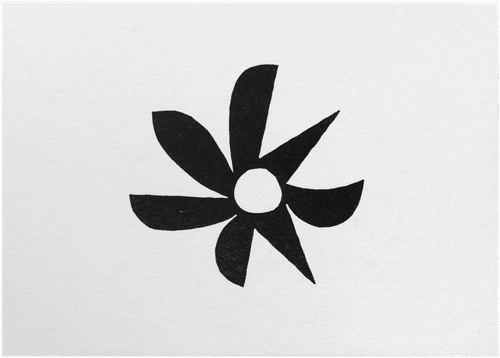
Risograph print, wider than it is tall. In the center is a black spiky shape with a circular hole in the middle. Each of the seven spikes has a different shape: some are curved on one side and stright on the other; some are curved on both sides; some are straight on both sides; one is curved like a smile or a sickle. The shape rests on two of these spikes, as if it is walking.
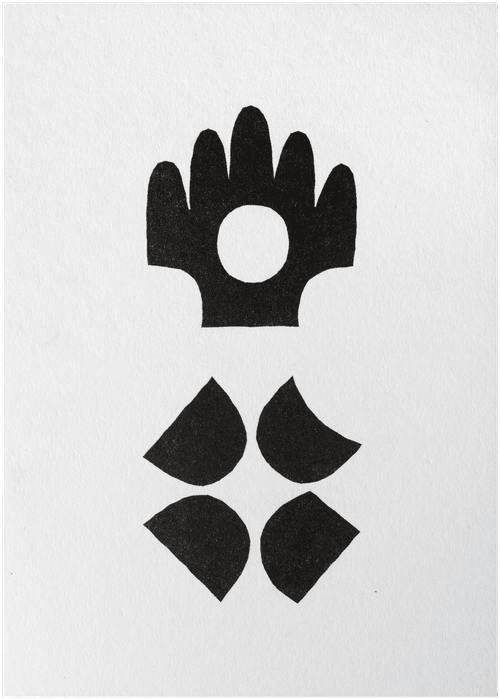
Risograph print, taller than it is wide. Two black symbols are arranged on top of each other. The top symbol resembles a symmetrical hand whose fingers are all equally short. The fingers farther to the edge are lower, so the shape as a whole resembles a house with a pointed roof. This shape has a circular hole in the middle. The bottom symbol is formed from four simple shapes of similar size arranged like an X around a central point; their curved sides are facing inward, and their points are facing outward.
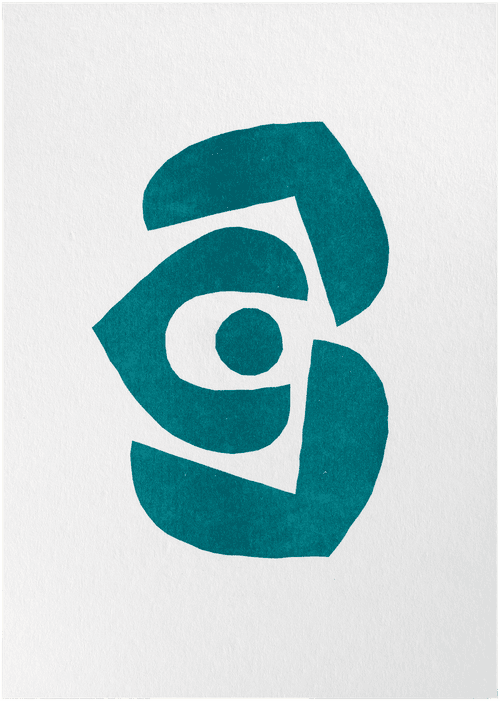
Risograph print, taller than it is wide. In the center is a symbol in teal composed of four solid shapes; they are layered around each other like rose petals. At the very center of the symbol is a small circle, which is nestled into a sideways heart-like shape with a large round opening between the lobes. This shape is held in turn by two other shapes above and below it, like open claws or pistachio shells.
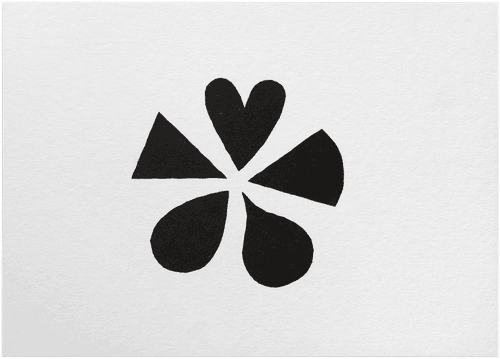
Risograph print, wider than it is tall. In the center is a symbol in black composed of five solid shapes of similar size. A heart, a pie slice, two different water drops, and an isosceles triangle are arranged with their points nearly touching each other in the center, so that the whole symbol resembles an irregular asterisk.

Curveblock Syllabic Alphabet

A featural writing system for English

D16 Syllabics

A syllabic, pictographic writing system for English

“Knee Play 1” visualization

Turning the details and feelings of a piece of music into visible objects
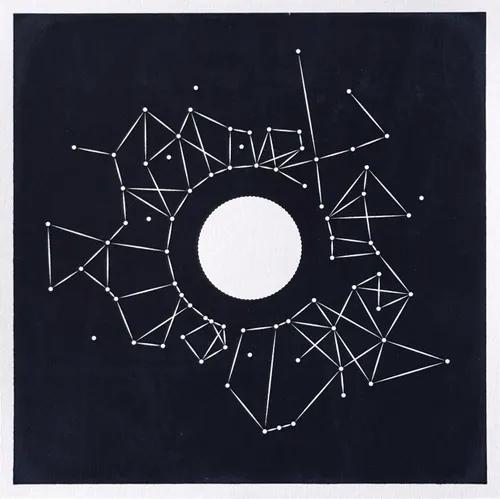
Network Writing System

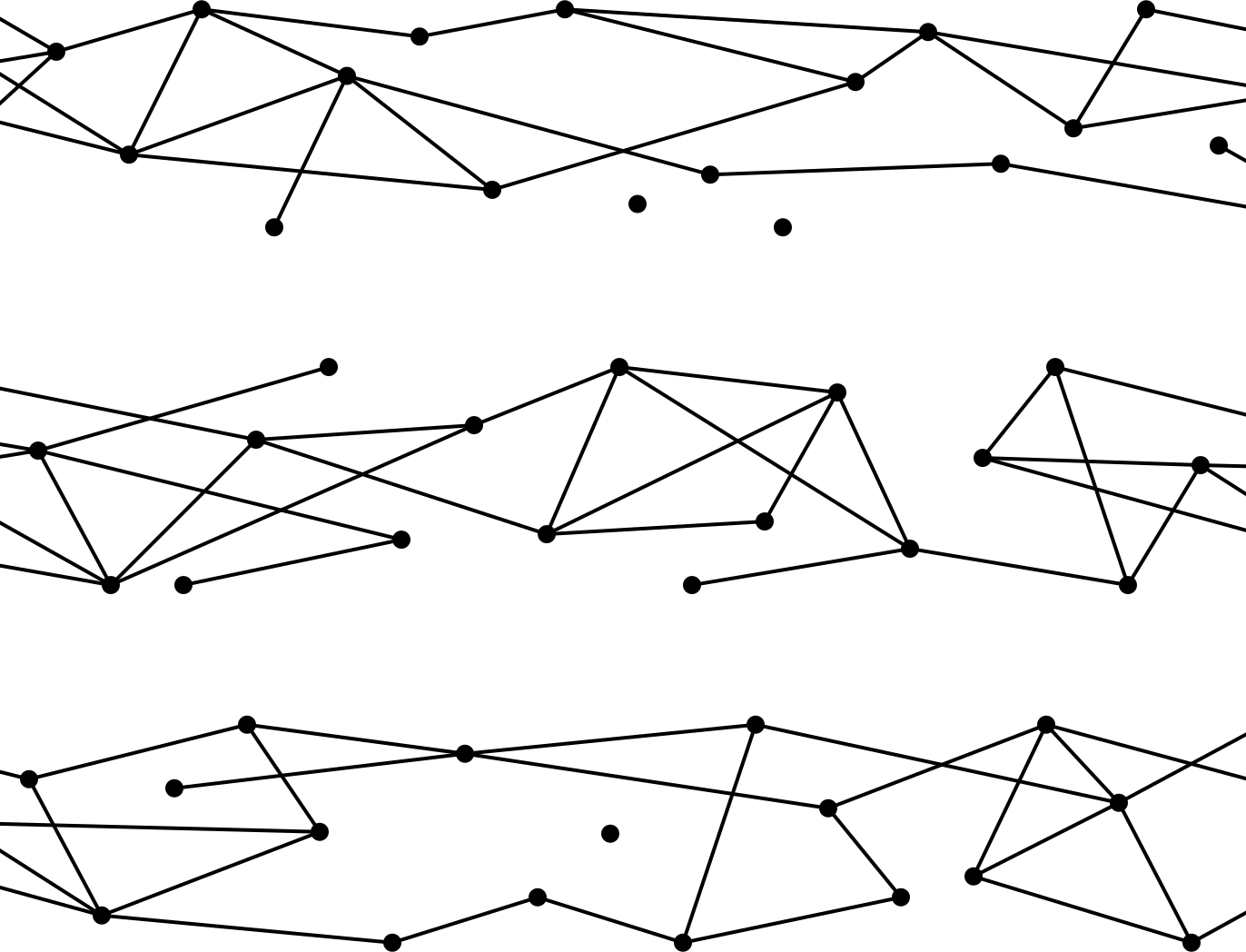
A system that represents text as a network of dots and lines

Square screen print. A thin white border surrounds a dark blue field. In the center is a white sun-like shape, a star with so many points it’s nearly a circle. Surrounding this sun are many small white dots, arranged irregularly like the stars in the sky, and connected with white lines. Rather than forming separate constellations, almost all these stars are connected into one complex network, and in many places the lines cross each other. The overall composition feels asymmetrical yet balanced.

Resolution Code

A bijection between shapes and texts

Recursive Prime Numeral System

A system that uses prime factorizations to break a number down into a visual structure
CRH Shorthand

My tool for fast writing, self-reflection, and expressive lettering

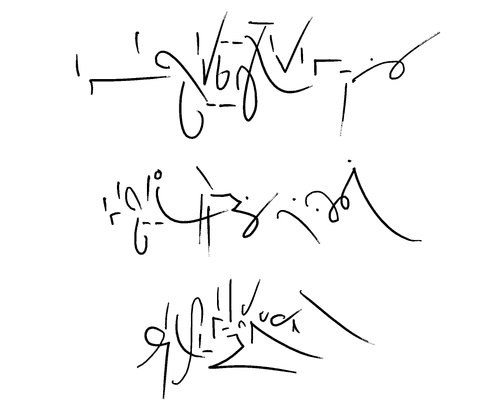
On a white background, five lines of writing in thin, black strokes, aligned to the center and surrounded by space. The writing is formed of short zigzags, loops, simple arcs, and combinations of these things, along with dots and straight lines in various directions. In some places, these components overlap and cluster together; in other places, strokes extend to create breathing room.
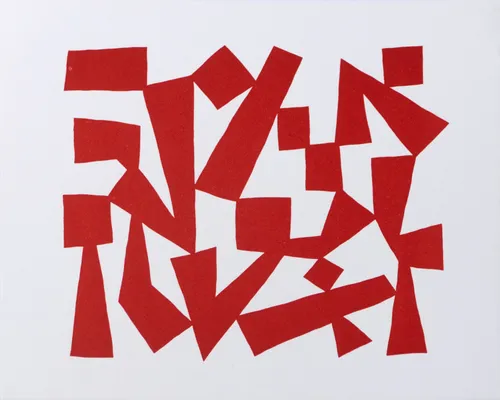
Letterpress print, wider than it is tall. A roughly rectangular field is filled with an unstable composition of angular red shapes with imperfectly straight edges, touching each other at their corners and sides. Some of the red shapes are squares or triangles; others are rectangles or other elongated shapes, often bent in the middle at sharp angles. The white spaces between them are spiky, like lightning bolts or maple leaves.
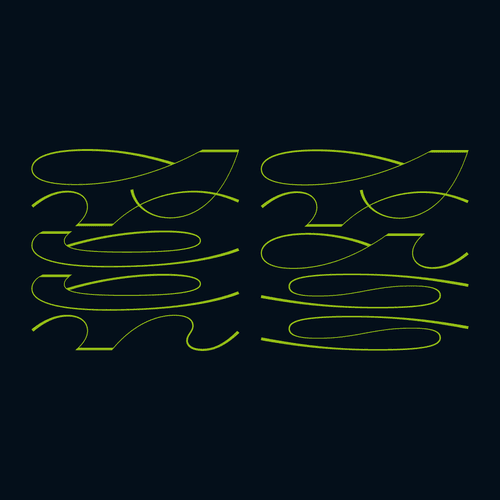
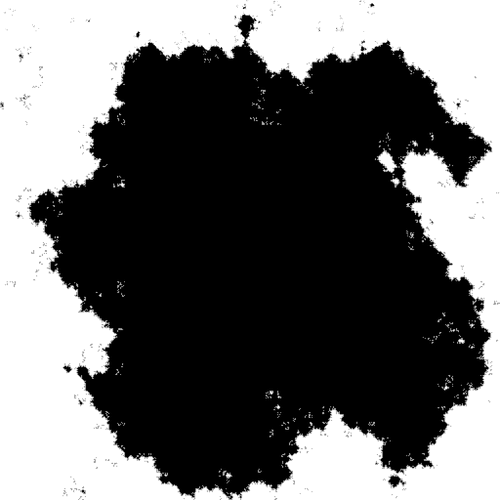
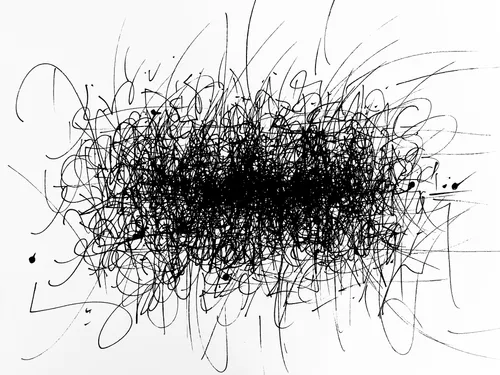
A energetic, vaguely Pollock-esque clump of black strokes, wider than it is tall. Right in the the middle they are so densely layered that it is almost fully black; toward the edge, they quickly get less dense. Individual strokes are visible around the edges: they are large and hastily-drawn, in some places curved and in others closer to straight; in some places angles are visible. In some places the ink fades out to almost nothing, and in other places drops of ink have dripped out of the pen to blot the paper. It’s a ball of knotted fibers pulling itself apart, but trying to say something to you.
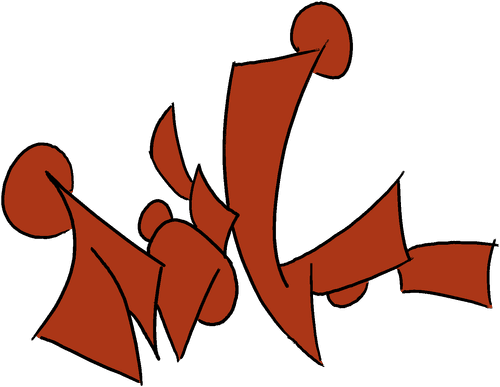
An asymmetrical graffiti-like composition in orange, outlined in black. Folded sheets of shape poke into each other and curve against each other, with circles and ovals peeking over the edges from behind. Most of the angles are sharp and no edge is perfectly straight.
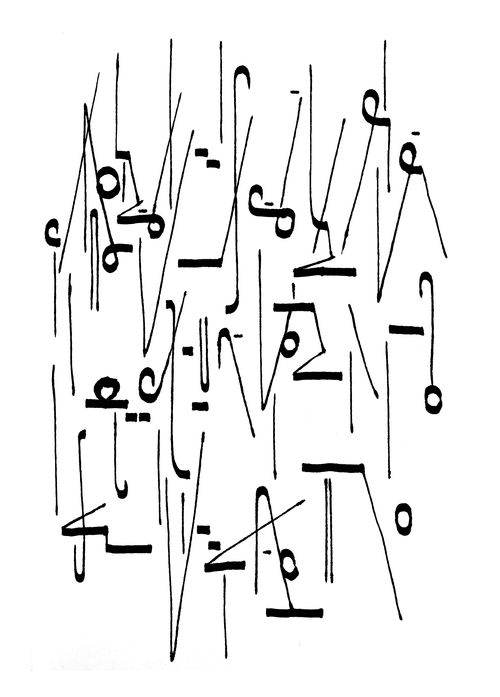
A vertical composition of black strokes on a white background, formed using a broadnib calligraphy pen. Short, thick horizontal strokes are scattered throughout, not aligned in any particular way, as are some circles and loops. Some of these elements are free-floating, but many of them are joined together with long, thin vertical and almost-vertical diagonal lines. More such thin lines stand on their own to fill out the piece with a steady up-and-down texture.
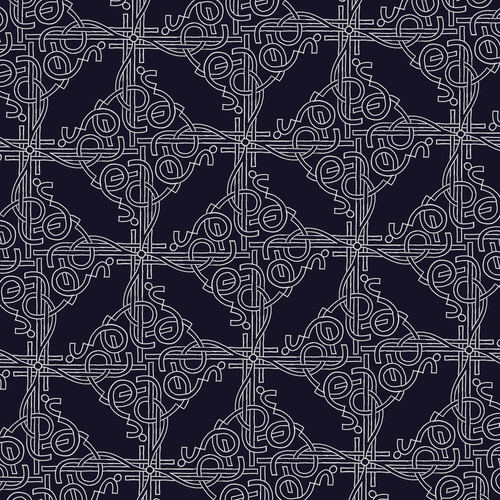
On a deep blue background, an elegant repeating pattern somewhat like a Celtic knot, but made of made of short, broken pieces of rubber band. These rectangles, loops, and curves of uniform width are outlined by thin silver lines; in some places they overlap and weave togehter; in others they merely touch. The overall pattern is built around a lattice, created by several aligned straight strokes; as the pattern is rotationally symmetrical, these strokes appear both horizontally and vertically. Large circular regions of negative space overlap with each other, with symmetrical clusters of strokes inside.
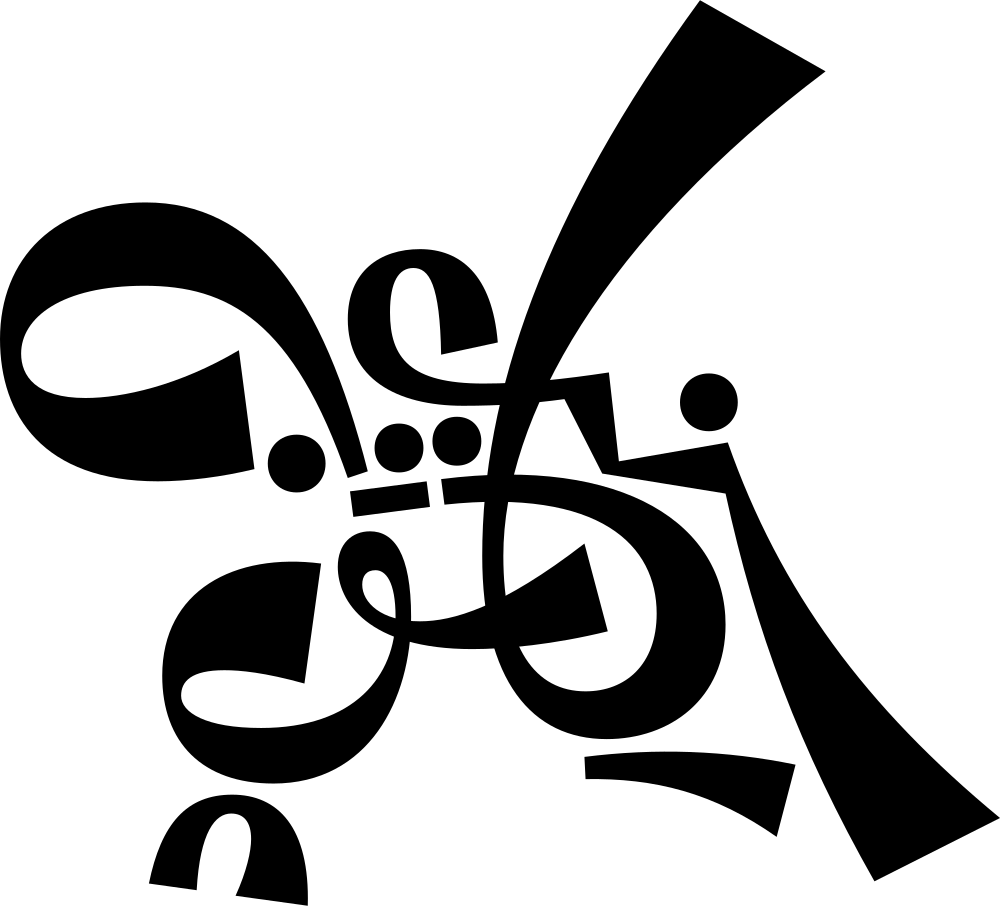
Several swooshing strokes in black bend and curl over each other, smoothly varying from thick to thin and back again. In the middle, where these strokes overlap, some of them are interrupted by gaps and angular segments. On the outside, they arc away from the central clump and end in thick, abrupt wedges. Several smaller shapes are scattered throughout, including four dots arranged along a diagonal line, punctuating the composition with their own uneven rhythm.

TypeCookerWest

Lettering from random prompts

VAoLM explorations

Toward a visual analog of linguistic meaning